


WeJoy-Live video chat&party
3.656.00 Reviews
App Specs
- Version
- 1.9.13
- Updated On
- License
- Free
- Downloads
- 1,000,000+
- Developer
- Polaris Team
- Categories
- Social
- Platform
- Android
Screenshots



 Analysis by AppCompare
I found WeJoy-Live video chat&party most interesting during the first few sessions, when the idea of meeting people through live video still felt fresh. It is a social app from Polaris Team built around real-time video conversations, matching, and party-style interaction rather than the slower rhythm of a traditional messaging network. The basic download is free, and its Mature 17+ rating is important: this is an app for adults who are comfortable with live contact and the unpredictability that comes with meeting strangers online.
My main question after using it was not whether WeJoy can provide a quick conversation. It can. The more useful question is whether those conversations become a habit worth keeping. That depends heavily on what you want from a social app. If you are looking for spontaneous face-to-face contact, it has a clear appeal. If you want a carefully organized community, dependable long-term friendships, or a quiet place to message people at your own pace, the experience is less convincing.
What the first week feels like
The strongest part of the experience is the immediate sense of possibility. A live video app removes much of the delay found in ordinary social platforms. You are not only reading profiles or waiting for a reply; the central promise is to connect in real time. That makes the first sessions feel active, especially when I was in the mood for a short conversation rather than a long exchange of messages.
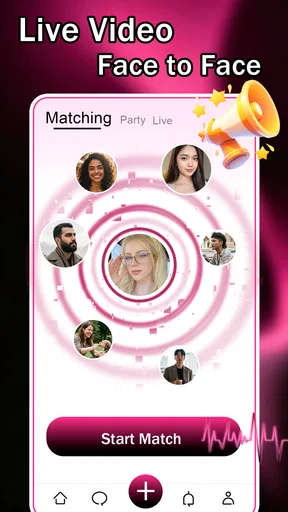
The matching element also changes the way I approached the app. Instead of deciding exactly whom to contact from a large list, I could treat each interaction as a small social surprise. That can be fun when I wanted something casual after work or during a quiet evening. It also creates a useful low-pressure option for people who find conventional dating-style apps too focused on polished profiles and carefully written introductions.
At the same time, live video leaves less room to prepare. A text conversation lets me think before answering, close the app without making the ending obvious, or decide whether somebody’s personality suits me. Video calls expose awkward pauses and differences in energy immediately. I consider that honesty a strength, but it also means the app is more demanding than a messaging service from the very first minute.
A practical way to test it is to use short sessions rather than opening it with the expectation of finding a close friend immediately. I found that a simple goal works better: have one or two pleasant conversations, notice which interactions feel respectful, and leave when the experience stops being enjoyable. That approach prevents the matching loop from becoming an endless search for a more interesting person.
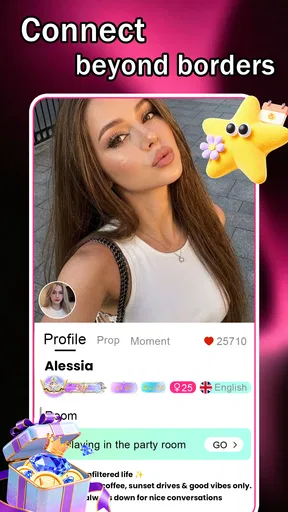
The party side gives the app a different mood from a one-to-one video tool. It suggests a more social setting where several people can share the same atmosphere, even if I am not ready for an intimate conversation. For outgoing users, that can make the app feel less like a series of interviews. For quieter users, it may be a gentler way to observe the tone of a community before deciding whether to participate directly.
Worth Reading Before You Choose

EA SPORTS FC Mobile 26 Is a Bigger Football Game, but It Takes Time

Flipboard Shows What News Apps Must Do Beyond the Feed

Switching to Android Auto Means Rethinking Your Driving Routine

Google Calendar Makes a Crowded Week Easier to Manage

Ludo King Makes the Most of the Minutes Between Plans

Baby Panda World Brings Quick Play to Modern Phones, but Its Game Library Feels Busy
Still, the first-week appeal is tied to novelty. Every new match feels potentially worthwhile because I have not yet formed an opinion about the app’s rhythm. Once the same types of conversations begin to repeat, the quality of the people I meet matters much more than the existence of the video feature itself. That is where WeJoy needs to prove that it offers more than a quick burst of entertainment.
Who benefits most from the live format
I can see WeJoy working well for adults who enjoy meeting unfamiliar people without arranging a formal event. It may suit someone who has recently moved, works unusual hours, or simply wants a little human contact without committing to a long social plan. The live format is also useful for users who believe they understand people better through tone and expression than through profile text.
It is less suitable for anyone who strongly prefers privacy, advance control, or asynchronous communication. A person who dislikes appearing on camera, needs time to build trust, or wants conversations to remain entirely text-based will probably feel more comfortable on a conventional messaging network. The Mature 17+ label should also be treated as a real boundary, not as a suggestion for younger users.
My advice for a first session is to decide in advance how much personal information you are willing to share. A live call can make people feel familiar very quickly, even when they have only just met. I would keep early conversations general, avoid sharing contact details too soon, and end any interaction that becomes uncomfortable. Those habits are especially important here because the app’s main activity is direct contact with people you do not already know.
A realistic everyday use case
Imagine finishing a late shift and wanting conversation, but not wanting to organize a group chat or travel somewhere. WeJoy can fill that small gap: open it, try a live match or party interaction, and spend a limited amount of time talking. The value in that situation is not necessarily finding a permanent friend. It is having an immediate social moment when your usual circle is unavailable.
That same scenario also shows the app’s limitation. If the first few interactions are repetitive, uncomfortable, or too focused on keeping attention rather than having a genuine exchange, the app does not automatically solve loneliness. The convenience gets you to people quickly, but it cannot guarantee compatibility. I would use it as one option in a social routine, not as a replacement for trusted relationships.
What remains after the novelty fades
After the first-week excitement, I started judging WeJoy by recurring value. The app has reached over a million installs and holds an average rating of 3.6 from around 5.3 thousand ratings, which suggests a sizeable audience but also a mixed overall reaction. I read that combination as a reason to keep expectations realistic: enough people are trying it to make matching worthwhile, yet the experience is clearly not universally satisfying.
Month-to-month usefulness depends on whether I can develop a personal reason to return. A social app earns a lasting place when it supports a repeatable behavior, such as checking in with familiar contacts, joining a particular kind of group conversation, or meeting people around a shared interest. WeJoy’s live matching and party orientation are naturally good for spontaneous visits, but spontaneity alone can become thin if every session starts and ends the same way.
I would return regularly if I enjoyed the process of discovering different personalities and could maintain a few comfortable connections. I would not return merely because the app keeps presenting more matches. More choices are not the same as better relationships. This is the key trade-off: WeJoy makes starting a conversation easy, while the user still has to decide which conversations deserve time and which should end quickly.
Compared with ordinary social networks, WeJoy feels more immediate and less dependent on carefully prepared posts. Compared with text-first chat apps, it offers faster clues about personality but demands more attention. Compared with dating-oriented services, it appears broader in spirit because the central activity is social video interaction rather than building a polished romantic profile. That difference may appeal to people who want casual contact, although users seeking a clearly defined relationship path may prefer a more specialized service.
The party concept is particularly relevant to long-term value. One-to-one calls can become tiring because every interaction places the full burden of conversation on two people. A group-oriented setting can distribute that pressure and create a more relaxed atmosphere. The trade-off is reduced control: larger social spaces can be noisier, less personal, and harder to judge. I would choose the party side when I wanted energy, and matching when I wanted a focused exchange.
One useful habit is to separate exploration from connection. During exploration, I would try new matches briefly and avoid treating every call as important. During connection, I would spend more time with people who show consistent respect and conversational effort. This simple distinction prevents the app from turning into a stream of disposable interactions and gives it a better chance of supporting genuine repeat use.
Costs, upgrades, and the maintenance burden
WeJoy is free to download, but in-app purchases range from $1.99 to $199.99 per item. That wide range makes spending discipline essential. I would not buy anything simply because a conversation feels exciting in the moment. Live social apps can create emotional momentum, and that is exactly when it is easiest to lose track of how much a small purchase is really adding to the experience.
Before spending, I would use the free experience long enough to answer three practical questions: Do I enjoy returning without pressure? Am I finding people I genuinely want to talk with again? Does a purchase improve a specific part of my routine rather than just extending the session? If the answer to those questions is no, paying is unlikely to fix the underlying problem.
The maintenance burden is not only financial. Video social apps require attention, emotional energy, and regular judgment. I have to decide when to answer, when to leave, and how much access to give a stranger. I also need to manage my own presentation, because opening a camera-based app when I am tired or distracted can make the experience feel like work rather than leisure.
That burden is lighter for users who enjoy short, clearly bounded visits. I would set a time limit, use the app when I actually want conversation, and avoid opening it automatically whenever I feel bored. A routine based on intentional use is more sustainable than constant checking. The latter can make the app feel demanding without producing better connections.
The current version is 1.9.13, and the app supports devices running Android 5.0 or later. That broad compatibility is helpful for people using older Android hardware, although live video quality will still depend on the device and connection in everyday use. I would test the experience on the phone I plan to use regularly rather than assuming that a compatible operating system guarantees a comfortable call.
Where fatigue begins
The first source of fatigue is repetition. Matching can feel exciting when each interaction seems new, but the basic pattern may become predictable: start a call, assess the mood, decide whether to continue, and repeat. If the conversations do not develop into recognizable relationships, the user may feel busy without feeling socially fulfilled.
The second is the pressure of instant performance. Even a friendly video call asks me to be present immediately. I cannot quietly browse while pretending to listen, and I cannot always control how a conversation ends. That intensity is valuable for authentic contact, but it makes WeJoy less suitable for passive use. I would not choose it when I want background entertainment or a calm, private break.
The third is the mismatch between quantity and quality. A steady flow of possible contacts can create the impression that the next interaction will be better, encouraging endless searching. My more useful approach is to judge the conversation in the first moments: Is the person respectful? Is there a natural exchange? Do I feel comfortable continuing? If not, leaving is more sensible than hoping the interaction will transform.
There is also a social-boundary challenge. The app is designed around meeting people in real time, so users need to be comfortable handling unwanted attention themselves. I would never treat the live format as proof that someone is trustworthy. Familiarity can arrive faster than actual knowledge, and that is a reason to keep boundaries firm even when a conversation feels pleasant.
For users who dislike uncertainty, the usual alternatives may be better. A text community organized around a known topic gives more context before contact. A private messaging app gives more control over who can reach you. A video service centered on existing friends avoids the stranger element altogether. WeJoy is strongest when uncertainty is part of the appeal, not when uncertainty is the main thing you are trying to avoid.
Small strategies that improve the experience
I found three decisions especially useful. First, choose the format according to your energy: use a party-style interaction when you want a lighter group atmosphere, and use matching when you are ready to focus on one person. Treating those as different moods makes the app feel less repetitive.
Second, use a graceful exit instead of waiting for a conversation to become unpleasant. A short call does not have to be considered a failure. In fact, ending early protects the time and attention that could be used for a better interaction later. This is a small but important advantage of approaching WeJoy as a tool for sampling social contact, not as a test that every match must pass.
Third, keep a personal return rule. For example, I would come back only when I wanted live conversation, not simply because I had a spare minute. If several sessions produce no comfortable exchanges, I would take a break rather than responding by spending more or searching longer. The best long-term strategy is to control the habit before the habit controls the session.
These strategies do not change the app’s basic design, but they change how much value I get from it. They also answer a question many new users have after the first few calls: how can I avoid turning a social app into a tiring routine? The answer is to make the experience selective. A few worthwhile conversations are more valuable than constant activity.
My long-term verdict
WeJoy earns a place on my phone for a specific kind of user: an adult who enjoys spontaneous video contact, accepts that some matches will be awkward, and can use the app with clear boundaries. Its free entry makes experimentation easy, while the live format gives it more immediacy than text-first alternatives. Polaris Team has shaped it around quick social discovery, and that focus is clear from the first session.
I would not recommend it as a universal social solution. People who want stable communities, carefully filtered contacts, or friendships that grow through slower conversation may find more lasting value elsewhere. The Mature 17+ audience should also take the direct-contact nature seriously, and anyone uncomfortable with camera-based interaction should skip it rather than trying to force a fit.
My final judgment is cautiously positive, with an important condition: WeJoy is better as an occasional social outlet than as an automatic daily habit. The novelty can open the door, but recurring value comes only from finding respectful people and choosing to return for a reason. Without that personal connection, matching and party interactions risk becoming a loop of brief encounters.
For me, the app passes the long-term test when I treat it as a focused way to add live conversation to an otherwise quiet day. It does not replace close friends, and it does not remove the work involved in building trust. But if you want the possibility of meeting someone new through video without committing to a formal social setting, I think it is worth trying for free. Just keep your time, privacy, and spending under your own control.
Pros
- Quickly meet people through live video chats and interactive party rooms.
- Fun virtual gifts and effects make conversations more engaging.
- Supports casual socializing without needing advanced technical skills.
- Large community can provide many opportunities to find active users.
- Useful for short entertainment sessions when you want spontaneous interaction.
Cons
- Some rooms may feel noisy
- crowded
- or difficult to follow.
- User activity and conversation quality can vary considerably by time and region.
- Virtual gifts and premium features may encourage in-app spending.
- Privacy can be a concern when interacting with unfamiliar people on camera.
- The experience may consume significant battery and mobile data during video calls.
FAQs for WeJoy-Live video chat&party
What is WeJoy-Live video chat&party, and what can I do with it?
WeJoy-Live video chat&party is a social communication app focused on live video conversations, group interaction, and online entertainment. After creating a profile, users can typically meet people through live rooms, video chats, messaging, and party-style activities. The available experience may vary by region, account level, and current app version, so it is worth checking the latest features before downloading.
Is WeJoy-Live video chat&party free to use?
The app can generally be downloaded and used without an upfront payment, but some features may require virtual coins, gifts, subscriptions, or other in-app purchases. Free access may include browsing rooms, joining selected conversations, and basic messaging, while premium functions can involve limits or additional charges. Review the purchase settings carefully and disable accidental payments if necessary.
Is WeJoy-Live video chat&party safe for children and teenagers?
WeJoy-Live video chat&party is designed for social interaction with people users may not know personally, so it may not be appropriate for children. Live video and chat content can change quickly, and users may encounter mature conversations, unwanted messages, or requests for personal information. Parents should check the app’s age rating, use device controls, and supervise younger users.
How can I protect my privacy while using WeJoy-Live video chat&party?
Avoid sharing your real address, phone number, school, workplace, passwords, financial details, or private photographs with strangers. Use a username that does not reveal sensitive information, review camera and microphone permissions, and check who can contact or view your profile. If someone behaves suspiciously, use the blocking and reporting tools instead of continuing the conversation.
What should I do if I experience harassment, fake profiles, or inappropriate content?
If another user sends abusive messages, makes unwanted requests, impersonates someone, or displays inappropriate content, stop interacting and use the in-app report and block options. Saving relevant screenshots may help when contacting support. Do not send money or personal documents to people you meet in the app. If there is a serious threat, contact local authorities and preserve all evidence.


